Across Africa, individuals migrate in search of employment and stability from one region to another, seeking readily available opportunities. As these movements occur, migrants travel without documentation or legal protection, which exposes them to dangers, including coercion, abuse, and trafficking. A recent article published by Diplomatic Courier highlights irregular migration as a major human rights concern. However, public discussion around migration often focuses on border enforcement, national security, and smuggling networks, and not much attention is given to how unsafe migration routes enable sexual exploitation across migration corridors. When migrants are forced into unsafe routes without protection, their rights to safety, dignity, and freedom from exploitation are directly threatened. Addressing this crisis requires developing safe migration options, strengthening gender-sensitive protection, and confronting the structural pressures that drive people into irregular migration.
The Incidence of Unsafe Migration Routes and Exploitation
In many African countries, economic instability, youth unemployment, and political insecurity shape migration decisions. For many families and communities, migration is a path to better living conditions. The resulting remittances sent home provide vital support for both households and local economies. However, when regulated migration channels are difficult to access, migrants often turn to informal intermediaries who promise to help them travel and secure employment. This dependence significantly reduces migrants’ control over their circumstances. Informal brokers often control transportation arrangements, accommodation, and job placement, allowing them to dictate terms without consequences.
Furthermore, these migrants travelling across borders frequently do so without enforceable contracts or legal documentation and may spend extended periods moving through informal settlements or temporary holding locations without safeguards in place. Without these protections, migrants have a limited ability to prevent abuse or exploitation. This issue is in addition to weak reporting systems, which further create conditions where exploitation can occur without immediate accountability.
Recent reports on violence against migrants travelling through Libya illustrate how unsafe conditions can escalate towards abuse and sexual exploitation. Migrants have described cases of sexual violence and captivity in transit environments controlled by armed groups and criminal networks. Women and girls face heightened vulnerability within these systems because gender inequality intersects with legal insecurity, since many of these migrants lack documentation, and fear of detention or forced return discourages them from reporting abuse. Thus, abuse thrives in silence, as perpetrators are not held accountable for their crimes.
Strengthening Protection Across Migration Systems
Migrants who cannot access work visas or regulated travel channels may rely on smugglers and informal brokers. This dependence strips migrants of control over transportation, housing, and employment placement, creating conditions where exploitation can occur. Therefore, an effective way to reduce this exploitation is to expand safe and legal migration pathways. Several African regional frameworks already recognize the importance of labor mobility and free cross-border movement. Still,inconsistent implementation and lack of knowledge prevent migrants from using these services. Addressing such barriers requires improving communication and coordination between regional institutions, border authorities, and migrant support networks so that migration procedures are clearly communicated and applied.
In addition, recruitment practices can also play an important role in preventing exploitation before migrants begin their journeys. Transparent recruitment standards can prevent deceptive practices, particularly when labor intermediaries fail to disclose employment conditions or impose hidden recruitment fees that trap migrants in debt-based coercion. Such transparency can be encouraged by establishing platforms that enable migrants to verify the credentials of licensed recruiters and confirm the authenticity of job offers before accepting employment. For example, Kenya’s National Employment Authority maintains a registry of licensed recruitment agencies that migrant workers can consult before accepting overseas employment offers. Clear and enforceable recruitment standards make it more difficult for exploitative actors to misrepresent job opportunities or impose unfair financial arrangements.
Pre-departure orientation programs can further support migrants by providing information about recruitment processes and employment conditions. Governments and civil society organizations (CSOs) should work together to provide pre-departure orientation programs to ensure migrants understand their rights and available support systems. Access to this information enables migrants to identify deceptive practices and make informed decisions before embarking on their journeys, thereby reducing reliance on intermediaries who profit from irregular migration.
Legal pathways alone are insufficient if protection systems do not operate independently of immigration enforcement. Migrants must be able to report abuse without fear and to avoid escalating their legal vulnerability. Confidential reporting channels supported by CSOs and migrant support networks should be established to allow migrants to seek legal guidance without fear of retaliation. CSOs and migrant support networks can play an important role in maintaining these reporting systems by connecting migrants with trusted assistance services and advocacy groups.
Protection must also extend to the environments migrants move through during travel. Many transit centers and migrant holding facilities fail to meet basic safeguarding standards. Overcrowded accommodation, poor lighting, and unreliable reporting systems create unsafe environments that can enable abuse. Stronger coordination between government and civil society can help identify patterns of exploitation and reduce the gaps in which abuse occurs. Together, these groups can help provide migrants with survivor-centered assistance, including safe shelters and access to medical and counseling services.
Africa Must Return to the Basics
Several untenable economic conditions create an environment in which households face limited opportunities and migration becomes less of a strategic choice and more of a necessity. Migrants who leave under these pressures are often more likely to accept unsafe travel arrangements or exploitative work opportunities. Strengthening economic inclusion can reduce these vulnerabilities by expanding market access, enforcing equal labor rights, and improving opportunities for women’s economic participation. These opportunities would reduce the likelihood of migrants accepting unsafe arrangements during their journeys.
Moreover, these strategies reinforce one another and work best when they are implemented together. Legal migration pathways reduce reliance on informal intermediaries; independent protection mechanisms improve accountability along migration routes; transparent recruitment standards limit deceptive practices before departure; structural reforms that expand economic opportunity reduce the urgency that drives high-risk migration in the first place. When these elements operate together, they narrow the conditions under which exploitation networks can function.
Migration will remain part of Africa’s mobility landscape as economic and environmental pressures evolve. The challenge is not the migration process itself but the conditions surrounding it. Strengthening protection mechanisms and addressing the structural pressures that drive irregular migration can disrupt the hidden economy built on migrant vulnerability. Protecting migrants is a moral responsibility essential for safeguarding human rights, reinforcing governance systems, and advancing sustainable development across Africa. Ensuring that migration systems protect rather than endanger those who move will be central to creating fairer, more humane conditions across African borders.
Mauminah Hussain is an African Liberty contributor for the Winter of 2026 and a Master’s student of Global Development at SOAS, University of London.
Article first appeared on The Star Kenya.
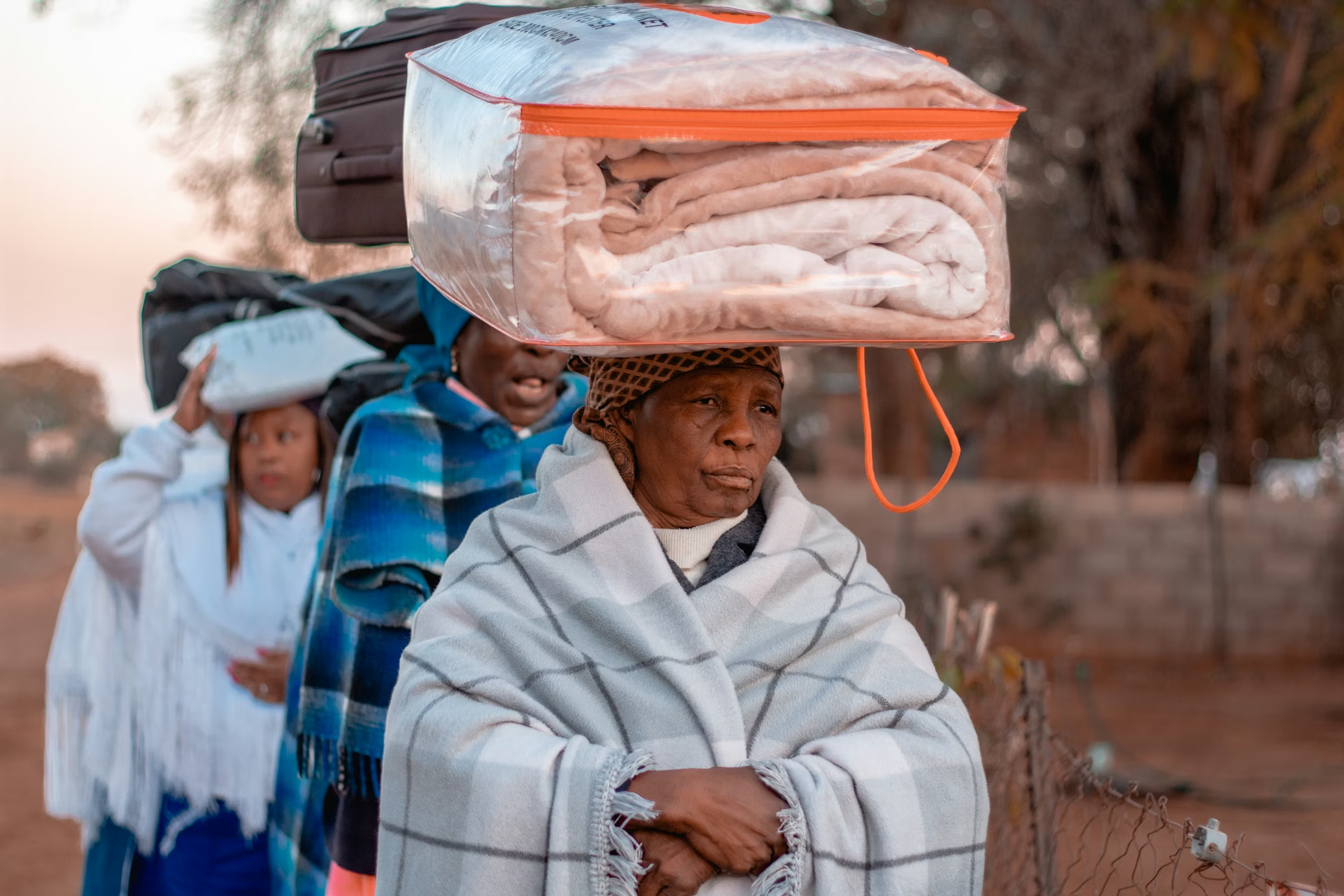
Image by Toro Tseleng via Unsplash.