
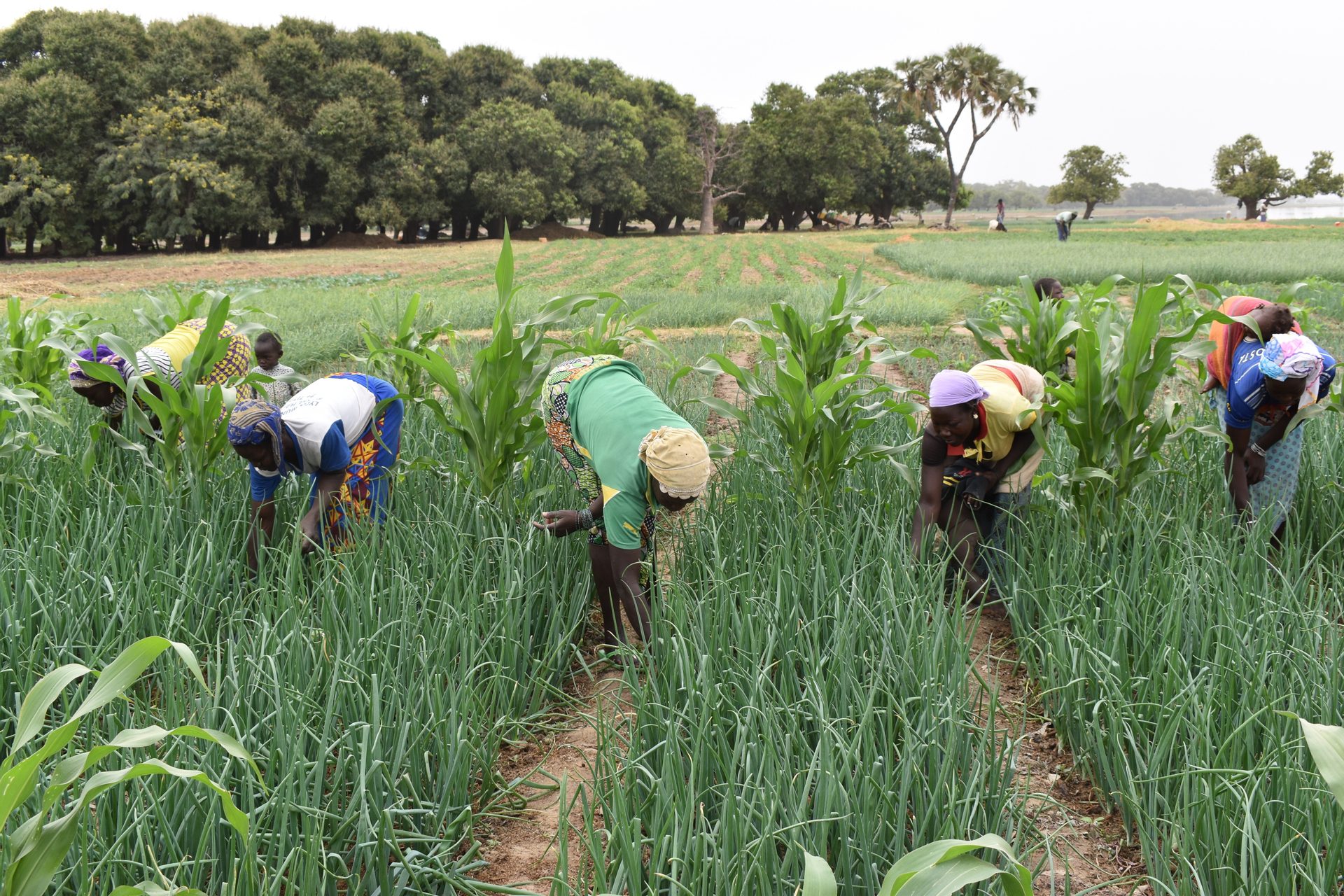
Women constitute a significant portion of the agricultural workforce in Africa, producing over 70 percent of the continent’s food supply. Yet, they face numerous challenges that hinder their full participation and potential within this sector. The systemic inequalities they face in accessing agricultural resources and the barriers to regional markets hamper their productivity and undermine their livelihood. The African Continental Free Trade Area (AfCFTA) offers an incredibly vast scope of action to enhance agricultural trade and food security, and it recognizes women as the vital link to driving this goal. The AfCFTA established the Protocol on Women and Youth in Trade; a policy that outlines general provisions, objectives, and guidelines for sustained action towards addressing these challenges and catalyzing the inclusivity and empowerment of women farmers across the continent.
In Africa, patriarchal systems and sociocultural norms undermine the fundamental rights of women. These discriminatory norms and institutional biases dictate and limit women’s access to opportunities, extension services, and land rights. In 2022, the United Nations reported that women own less than 20 percent of land despite comprising over half of the farming community in Africa. Inequalities in land control and ownership increase women’s dependency on male relatives for this vital resource. Without secure land tenure, women farmers have less incentive to invest in improving their land, leading to lower agricultural productivity and depriving them of the security, income, status, and opportunity to contribute meaningfully to the continent’s agricultural sector.
The AfCFTA aims to eliminate these barriers through the Protocol on Women and Youth in Trade. Article 8 of the protocol encourages member state action and commitment to promote empowerment, eradicate discriminatory practices, and enhance the productive capacity of women and youth in trade. Under the AfCFTA framework, African countries should jointly adopt and implement measures in line with Article 8 of the protocol. The national leaders must work together to establish gender-inclusive policies, harmonize their legal frameworks, and eliminate discriminatory laws and practices to pave the way for the sustainable growth and transformation of Africa’s food system through women’s participation.
African women farmers are disproportionately marginalized/sidelined in terms of access to credits and loans for agricultural inputs. Without land to use as collateral for access to credit and financial services, financial institutions frequently overlook women farmers, offering them little to no loans compared to their male counterparts. Women’s lack of financial support impedes their ability to invest in quality seeds, fertilizers, and farming equipment, further limiting their economic opportunities.
Article 11 of the AfCFTA protocol provides detailed guidelines to address the issue of minimal access to finance for women farmers. This article obligates member states to implement measures to facilitate access to affordable financial instruments, services, and guarantees for women and youth in trade. Under the agreement, member states should establish and implement land reforms that secure women’s land ownership and tenure rights. They must also provide legal assistance to women to help them navigate land acquisition and registration processes.
Beyond land reforms, African leaders must also establish partnerships between governments, financial institutions, and microfinance organizations to offer collateral-free, low-interest loans to women and support the establishment of women-focused cooperatives. Implementing such measures will create an environment where women have equal access to land and can fully participate in the continent’s economic growth.
Women farmers often encounter barriers to regional markets due to trade restrictions, inadequate infrastructure, and lack of information. They are frequently marginalized in agricultural value chains, earning lower incomes and facing higher risks of exploitation and economic vulnerability. These constraints restrict their ability to produce commercially and sell their produce at competitive prices, limiting their economic opportunities.
As the largest free trade area in the world through the number of participating countries, the AfCFTA creates market opportunities to enhance women’s access to regional and international markets. Furthermore, Articles 7, 12, and 13 of the protocol advocate for eliminating non-tariff barriers, developing training programs, and providing access to information to enhance women’s participation in cross-border trade. African leaders can leverage the detailed article guidelines of the protocol in collaborating and developing robust infrastructure, such as roads, storage facilities, and market centers across member states, as well as training women for improved understanding and compliance with cross-border trade regulatory requirements. Improved infrastructure and knowledge will enable women farmers to access larger and more lucrative markets, reducing post-harvest losses and ensuring better prices for their produce.
Women’s potential in Agriculture is underexplored across Africa. The systemic challenges they face only serve to perpetuate cycles of marginalization and poverty with rippling effects on their families, communities, and continent. Through the Protocol on Women and Youth in Trade, the AfCFTA offers a unique opportunity to advance the participation and empowerment of women in agriculture for the sustainable food production and security of the continent. However, sustained member action is necessary to realize the noble goals of the AfCFTA’s protocol. African leaders must jointly adopt and implement the Protocol/guidelines for a more inclusive, equitable, and prosperous Africa.
Chiamaka Adinnu is an Editor at African Liberty with a master’s degree in Food Safety and Quality Engineering.
Article first appeared on Business Day.
Photo by U.S.EmbassyBF via Unsplash.