Social and economic development is a dividend of democracy.
In Nigeria, democracy has become a ceremony. Every four years, millions of voters cast ballots, anticipating a government that can create employment, provide good healthcare, security, and essential amenities. Yet, after the elections, things remain the same, with poor roads, inadequate hospitals, subpar schools, and unreliable electricity. Despite being hailed as “Africa’s largest democracy” since 1999, over 60 percent of Nigerians live in multidimensional poverty. What gain is a country’s democracy if it does not improve the lives of its citizens? For Nigeria’s democracy to thrive, it must go beyond ballots and political speeches to include substantial development. There is a need to meet citizens’ basic needs, empower local governments to drive change, and fight corruption to ensure that citizens have access to public resources.
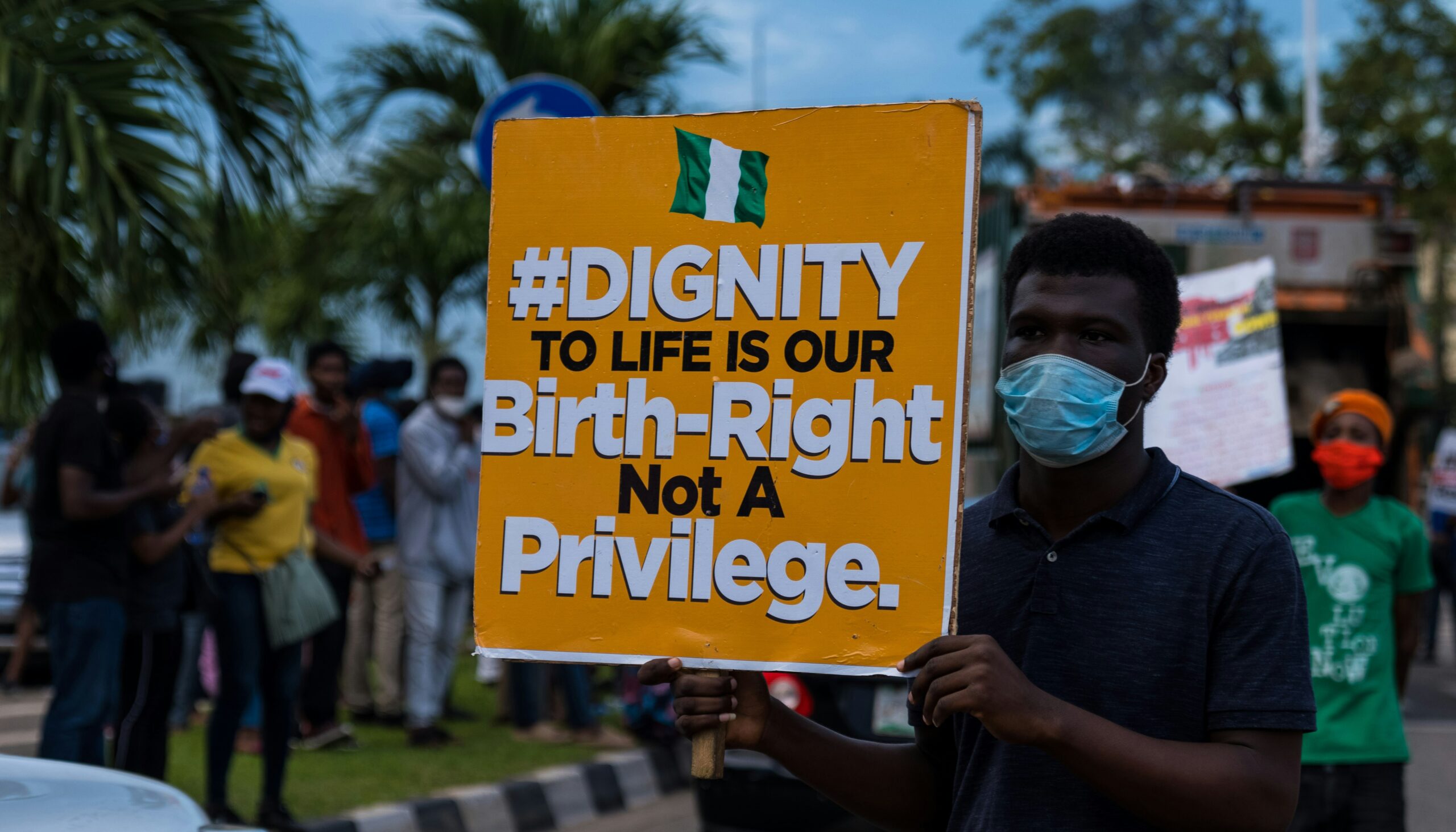
Democracy should improve citizens’ human dignity, but in Nigeria, this is not the case. Many citizens now see elections as a cycle of hope’s betrayal. Voter turnout declined from 69 percent in 2003 to 27 percent in 2023, marking the lowest rate in Nigeria’s history. To reverse this decline, politicians and public officials must view democracy as more than a contest for power and address basic needs such as jobs, electricity, healthcare, and security. With these needs in place, citizens will know their votes count, restoring trust in government and the political system.
Empowering local governments is crucial for driving economic development, strengthening democratic stability, and enhancing essential services at the grassroots level, where citizens can directly feel the impact of governance. The reality of Nigeria’s political structure disconnects the federal purse from the grassroots. Local government councils often lack the resources, autonomy, and political will to address community needs. Sometimes, the allocations do not reach the villages and towns where people earn their livelihoods.
Democracy should improve citizens’ human dignity, but in Nigeria, this is not the case.
The federal government must ensure local governments have access to funds, strengthen their administrative capacity, and hold them accountable. Countries with functioning democracies often experience faster and more inclusive growth because their policies directly affect the people. Kenya’s county system, for example, has facilitated the improvement of local health and infrastructure. In Ghana, decentralization has strengthened local assemblies, giving citizens a greater voice in managing resources.
Ending corruption is the foundation upon which all other reforms must rest. Nigeria loses billions of naira to corruption, inflated contracts, and ghost projects each year. Anti-graft agencies, such as the Economic and Financial Crimes Commission (EFCC), must go beyond high-profile arrests and focus on the impartial prosecution of all corruption suspects. The EFCC should work independently, without political interference, and focus on tackling financial crimes. Courts need to be adequately equipped so that they can prosecute financial crimes swiftly. To tackle corruption effectively, Nigeria must move from arrests and prosecution to fixing the systems that enable it. For example, there should be public tracking of budgets and contracts for transparency. With public tracking, funds diversion will become minimal.
Public accountability is also important for citizens to track the government’s use of public funds. Citizens must ask questions and hold leaders accountable. For example, digitizing procurement processes can verify them instead of their existing only on paper. Civic technology platforms, such as BudgIT, prove that transparency is possible and that the public can keep leaders in check. If corruption continues unchecked, even the most visionary development plans will collapse under its weight.
Social and economic development is a dividend of democracy. When people vote, they invest in a future that should yield returns as better living conditions. Failing to deliver those returns is a breach of the social contract, the costs of which are economic stagnation and political instability.
To tackle corruption effectively, Nigeria must move from arrests and prosecution to fixing the systems that enable it.
The failure of democratic governments sometimes forces citizens to consider authoritarian alternatives, such as military regimes, believing they can succeed where elected leaders have failed. This is already trending across Africa. Public anger over insecurity and poor governance fueled repeated coups in Mali and Burkina Faso. In Zimbabwe, decades of economic decline and weak democratic institutions allowed authoritarian rule to tighten its grip. Even in Tunisia, once seen as the success story of the Arab Spring, frustration with political deadlock opened the door to growing authoritarian control. Nigeria must uphold its democracy to prevent the occurrence of military coups as in other African countries. A strong democratic system ensures stability, protects citizens’ voices, and holds national institutions accountable. When democracy is dysfunctional, corruption and insecurity deepen, slowing down development. By protecting its democracy, Nigeria is safeguarding its future.
Democracy should be a means of improving individual lives. A system that only guarantees the right to vote while leaving citizens in hardship is democracy in name but not in spirit.
Morenikejimi Abiodun Olaleye is a fellow at African Liberty.
Article first appeared in BusinessDay.
Photo by Ayoola Salako on Unsplash.