In 2025, sovereign-debt sustainability was largely a matter of luck, but in 2026, governments and creditors must adopt a more proactive framework that detects and tackles hidden vulnerabilities early and delivers restructuring agreements swiftly enough to provide real relief.
Across Africa, debt restructuring continues to dominate the policy agenda. Swings of over $11 billion in the debt-service positions of Ethiopia and Ghana underscore why: With restructuring negotiations often lasting years, countries remain vulnerable to external shocks, and their resilience depends significantly on the currencies with which they operate.
Ghana’s cedi appreciated around 40% against the US dollar in 2025, thanks to the government’s recent efforts to build up the country’s gold reserves. This reduced the country’s external debt burden by $14 billion – more than 24% of the total. Ghana’s debt is now approaching the target, set by the International Monetary Fund, of 55% of GDP, three years ahead of schedule.
The IMF still considers Ghana to be at high risk of debt distress because the currency gains may prove temporary. The US dollar could, after all, rally, though gold does appear to be on a consistently upward trajectory. In any case, markets are now charging less than 7% interest on Ghana’s eurobonds, a 300 basis-point decrease from May, though the benefits are not likely to be passed on to a population that has endured a painful fiscal adjustment in recent years.
The West and Central African countries using the euro-pegged CFA franc have enjoyed relative stability and low inflation, with dollar-denominated debt falling by around 12% last year. For Cameroon, this amounted to $2.8 billion in automatic debt relief. For Chad, the improvement could lead to an improvement in its credit rating, from high to moderate risk. These countries owe their progress not to structural reforms, as Ghana undertook, but rather to being in the “right” currency zone for now.
The same cannot be said for Ethiopia. While the country has managed to secure a preliminary agreement with creditors holding some of its $1 billion 2024 international bond, its financial situation has deteriorated sharply since negotiations began. Despite undergoing a difficult fiscal adjustment akin to Ghana’s, its debt increased by $4.8 billion in 2025, as its currency, the birr, fell 25% against the US dollar. But Ethiopia’s restructuring, which it has been negotiating with official creditors for five years, is expected to deliver a mere 1.5% reduction in the present value of total external debt – about one-third of the depreciation-induced increase.
Ethiopia’s experience illustrates how protracted negotiations can allow manageable challenges to escalate into severe crises. When the country began negotiations with official creditors in 2021, its debt distress was primarily a liquidity issue: external debt service exceeded foreign-exchange availability, but the economy was growing at more than 5% annually, according to IMF estimates.
Over the last five years, however, Ethiopia’s liquidity crisis mutated into a solvency crisis. While domestic developments, such as violent conflict in some regions, may have contributed to this deterioration by undermining exports, the delay in debt restructuring was the main culprit, as it left room for external conditions to turn against Ethiopia: between December 2023 and December 2025, the birr collapsed from 55 per dollar to 154 per dollar.
Over this period, Ethiopia’s external debt as a share of exports soared, and the country’s international reserves fell to less than 0.6 months of import cover. By the time a memorandum of understanding on debt restructuring was signed last July, the relief on offer could barely cover the valuation losses Ethiopia had suffered. Today, the IMF classifies Ethiopia’s debts as unsustainable, owing to prolonged breaches of export-related external-debt indicators.
Accelerating the restructuring process even slightly can deliver major benefits. Zambia defaulted in November 2020, concluded a restructuring agreement with official creditors in June 2023, and finalized private deals in 2024. By early 2025, it had restructured 94% of its external debt. This, together with the kwacha’s 20% appreciation against the US dollar (driven partly by higher copper prices), reduced the country’s debt burden to just 80% of GDP by the beginning of this year, from 150% of GDP in 2020. Fitch has now upgraded Zambia’s credit rating to B-, and S&P to CCC+.
The message is clear: accelerating debt-restructuring negotiations is essential. To that end, a time limit of two years – or, better yet, 18 months – for resolving debt crises should be introduced. Both the IMF and national governments must put more effort into early detection of liquidity pressures and solvency risks. And additional action should be taken to improve countries’ macroeconomic stability, beginning with the adoption of a consistent approach to currency movements. If a 20% depreciation worsens the IMF’s assessment of a country’s macro position, a 20% appreciation should improve it, with risk ratings adjusted accordingly.
Moreover, countries must adopt more active debt-management and currency-diversification strategies, and multilateral development banks must accelerate discussions on local-currency lending tools, which can help countries manage external exchange-rate movements.
In 2025, sovereign-debt sustainability was largely a matter of luck, as the contrasting experiences of Ghana and Ethiopia show. In 2026, governments and creditors alike must embrace a new framework for action on debt – one that distinguishes between liquidity shortages and solvency risks, identifies and addresses hidden debt issues before they spiral out of control, and delivers restructuring agreements fast enough to offer genuine relief.
Vera Songwe, a nonresident senior fellow at the Brookings Institution, is Founder and Chair of the Liquidity and Sustainability Facility and Co-Chair of the Expert Review on Debt, Nature, and Climate.
Article first appeared in African Newspage.
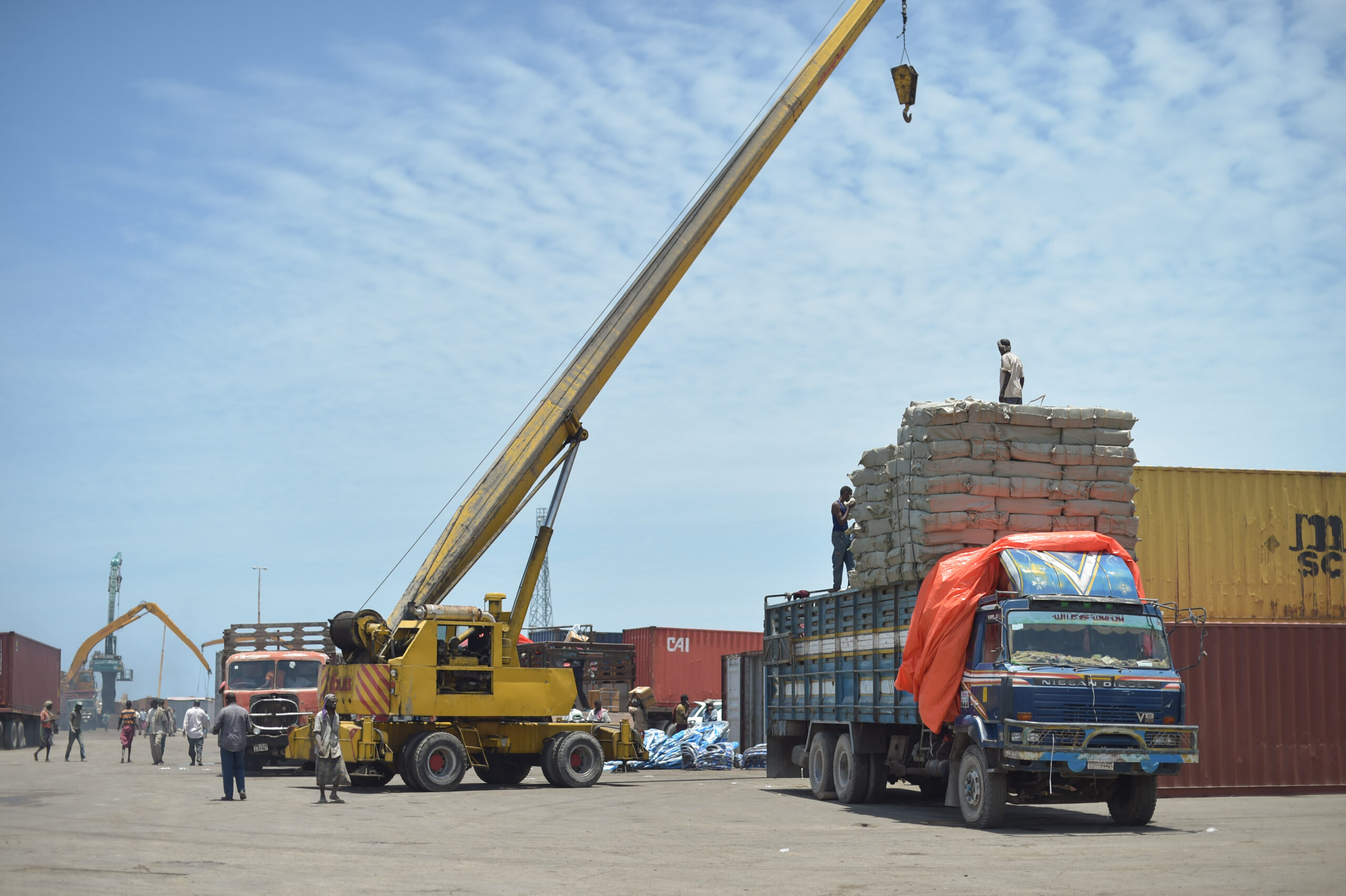
Photo by AMISOM via Iwaria.