Digital and social media platforms that once advanced press freedom for women journalists are now enablers of targeted attacks. Across Africa, women journalists face widespread online harassment, including doxxing and other forms of technology-facilitated abuse. A 2025 survey by the United Nations Educational, Scientific, and Cultural Organization (UNESCO) in partnership with the International Center for Journalists (ICFJ) shows that online attacks on women journalists influence how they report on governance and social issues. These attacks, targeted to pressure and silence critical women’s voices, are threats to press freedom and gender equity. To address these threats, there is a need for stronger legal protections, online platforms’ safety measures, and support networks for women journalists.
Evidence shows that online violence against women journalists is widespread and intersects with broader concerns about press freedom. The UNESCO-ICFJ survey found that 74.9 percent of women journalists experienced online violence, with 41.6 percent reporting offline attacks linked to digital abuse. When online harassment escalates into threats, doxing, and offline attacks, it discourages women journalists from investigative reporting and politically sensitive issues. The consequence of these attacks is a shrinking media space where women journalists feel unsafe holding political powers accountable.
Tackling online violence against women journalists requires legal reforms that recognise technology-facilitated violence as violating press freedom and personal safety. Existing cybercrime and anti-harassment laws in Africa, such as Nigeria’s Cybercrimes Act 2024, either lack clear protections for journalists or have inadequate enforcement. Such laws allow perpetrators to act with impunity. Constitutional and criminal frameworks should clearly define digital threats, doxing, online harassment, and other organised smear campaigns as offences. To combat the online abuse of women journalists, laws should clearly define it as an offence. There should be specific penalties for offenders, and law enforcement personnel must receive training to handle cases with sensitivity and urgency.
Legal reforms will reduce impunity by creating pathways for accountability and deterring perpetrators from targeting women journalists. Reforms will also strengthen the rule of law, ensuring women journalists report without fear of online and physical attacks.
Technology companies are relevant stakeholders in shaping the safety or hostility of digital spaces for women journalists. Social media platforms are often the primary sites of harassment, targeted abuse, and threats against women journalists. Existing social media reporting and moderation frameworks remain ineffective in addressing online abuses, particularly in Africa. A report by the Firoz Lalji Institute for Africa highlights significant gaps in the moderation of harmful content in African languages, allowing such content to spread unchecked. The report notes that big technology platforms like Meta and X currently verify content in limited African languages, including Arabic, Amharic, Swahili, Hausa, Somali, isiZulu, Yoruba, and Afrikaans. Expanding moderation to more African languages is crucial to prevent harmful content from spreading.
Beyond moderation, social media and other digital platforms should strengthen reporting mechanisms for online violence. These platforms can create journalist-specific escalation channels, deploy trained local-language moderation teams, and establish rapid response systems for journalists facing coordinated attacks or credible threats. Improving platform safety will reduce immediate harm and help women journalists remain visible and active online, keep them engaged in public debate, and strengthen their press freedom.
Besides legal reform and platform accountability, strong support networks are critical for combating online violence against women journalists and protecting them from the effects of this violence. Civil society organizations, journalist unions, and media institutions must collaborate to equip women with relevant tools and skills to withstand and respond to online attacks. Digital safety training, such as the one conducted by Media Rights Agenda in 2025, should be made continent-wide to help journalists reduce and manage their exposure to online threats.
Access to legal aid and mental health support is crucial, as prolonged harassment could lead to stress and self-censorship. Media companies should establish rapid response networks to document online abuses, connect victims to legal services, and escalate serious threats to the police. Law enforcement agencies should equip personnel to respond promptly to reports of online abuse. Also, media houses should adopt internal protocols that support staff facing online attacks and not treat them as a personal burden. The effective implementation of support networks will empower women journalists to build professional resilience and sustain their careers.
Effective legal accountability, responsible digital platform practices, and support networks will strengthen the work of women journalists. These measures are necessary to prevent self-censorship and the normalization of online abuse of women journalists. Safeguarding women journalists is essential for freer, more informed, and inclusive journalism in Africa.
Ayomide Eweje is a writing fellow at African Liberty.
Article first appeared in The Cable.
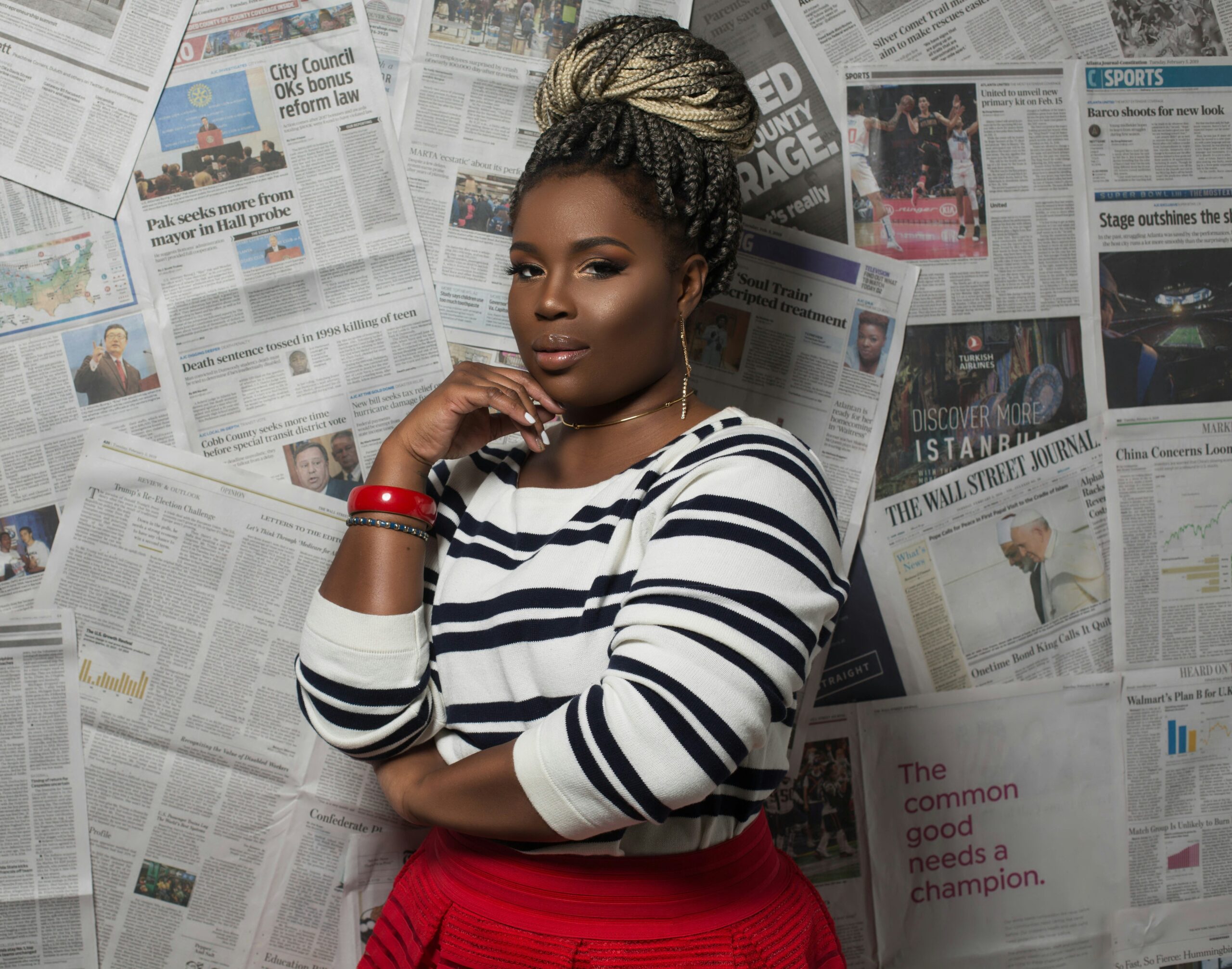
Photo by Mikelya Fournier on Unsplash.