In July 2025, a viral video of His Royal Majesty Eze Dr. Chukwudi Jude Ihenetu, the self-proclaimed King of the Igbo diaspora in Ghana, generated considerable public controversy. The footage showed him stating plans to acquire land in Old Ningo, in the Greater Accra Region, to establish a symbolic “Igbo Kingdom” in Ghana. What started as a simple announcement suddenly turned into widespread outrage and prejudice against the Nigerian-Igbo community in Ghana. Many Ghanaians viewed the move as a threat to national sovereignty, likening it to a foreign government attempting to establish a foothold within Ghana’s borders. To prevent such disunity and rising prejudice, Ghana must allow cultural expression while protecting national unity through clear laws, diplomatic dialogue, and civic education.
Eze Ihenetu’s speech was not just about cultural pride; it exposed a growing dissatisfaction among Ghanaians toward the growing presence of Nigerians in the country. While Ghana has every right to safeguard its institutions and national integrity, we must ask: where do we draw the line between protecting sovereignty and fueling xenophobia?
Cultural expressions by foreign nationals must always respect the host country’s norms and political climate. Yet, using one man’s misstep to vilify an entire community is not justice; it is prejudice, and it risks inflaming dangerous xenophobia. If left unchecked, such tensions can revive the painful history of mass deportations. Ghana first deported Nigerians in 1969, a move that left lasting anger and later resulted in the infamous “Ghana Must Go” crisis of the 1980s. To prevent such an occurrence, the Economic Community of West African States (ECOWAS) must strengthen its role in promoting mutual respect and fostering cultural tolerance among member states. Taking decisive steps now is essential for moving forward in a positive direction.
To achieve this, ECOWAS can take concrete steps such as developing a regional framework to manage cultural and migration-related tensions among member states. This framework should include early warning systems to identify rising xenophobia, conflict resolution committees that involve traditional and government leaders, and regional awareness campaigns that promote African unity. By working closely with national ministries of culture and foreign affairs, ECOWAS can help mediate disputes.
A starting point is for the Ghanaian government, through the Ministry of Chieftaincy and Religious Affairs, to establish clear rules governing the operation of foreign cultural leaders and communities in Ghana. These rules should outline the permitted actions of such leaders, the registration process through which foreign cultural leaders and their communities must officially register with local authorities, and the collaboration required with Ghanaian chiefs to prevent the creation of parallel power structures. They should also ensure that the human rights of immigrants are protected in line with the Universal Declaration of Human Rights, while supporting initiatives that celebrate shared West African heritage.
For inclusivity, the ministry should establish these rules in collaboration with local Ghanaian chiefs, leaders of immigrant groups, and host communities to ensure that all voices are represented and heard. This collaborative rule-making process should be done quickly, especially in areas such as Accra and Kumasi, where many immigrant communities reside. Clear rules will protect Ghana’s traditions while still allowing for lawful cultural expression by immigrant communities and hence, reducing the risk of misunderstandings escalating into xenophobia.
Additionally, Ghana and Nigeria should establish a combined cultural diplomacy task force to facilitate open discussions on sensitive cultural issues before they escalate into major problems. This group can include officials from the foreign affairs and culture ministries of both Ghana and Nigeria, traditional leaders, and leaders of Nigerian communities in Ghana. ECOWAS can play a supporting role by facilitating dialogue, monitoring cross-border relations, and offering mediation when disputes arise. The team should meet every few months in either Accra or Abuja and intervene promptly if a cultural dispute arises. Both governments should sign an agreement to support the joint cultural diplomacy task force and provide funding to cover meetings, joint programs, and initiatives that promote cultural understanding and heritage celebrations.
Equally important is the role of Ghanaians in preserving their country’s hospitality tradition. One way to do this is through civic education in schools, churches, mosques, and the media. The National Commission for Civic Education, faith leaders, and teachers can lead this effort through programs and messages that promote tolerance, respect, inclusion, and African unity. Radio and television programs can also share positive stories of Ghanaians and Nigerians living and working together peacefully. This kind of civic education is crucial because it would help raise a generation that rejects hate and views African identity as a unifying force rather than a divisive one.
The recent uproar in Ghana is not just about a king’s speech; it is a reminder to all African countries that peace is fragile. Africans must recognize that Pan-Africanism is more than just flags and slogans; it is about how they treat one another. The Igbo Kingdom controversy has the potential to be a watershed moment that either deepens their divisions or invites them to work together.
Gideon Danso is a writing fellow at African Liberty.
Article first appeared in Modern Ghana.
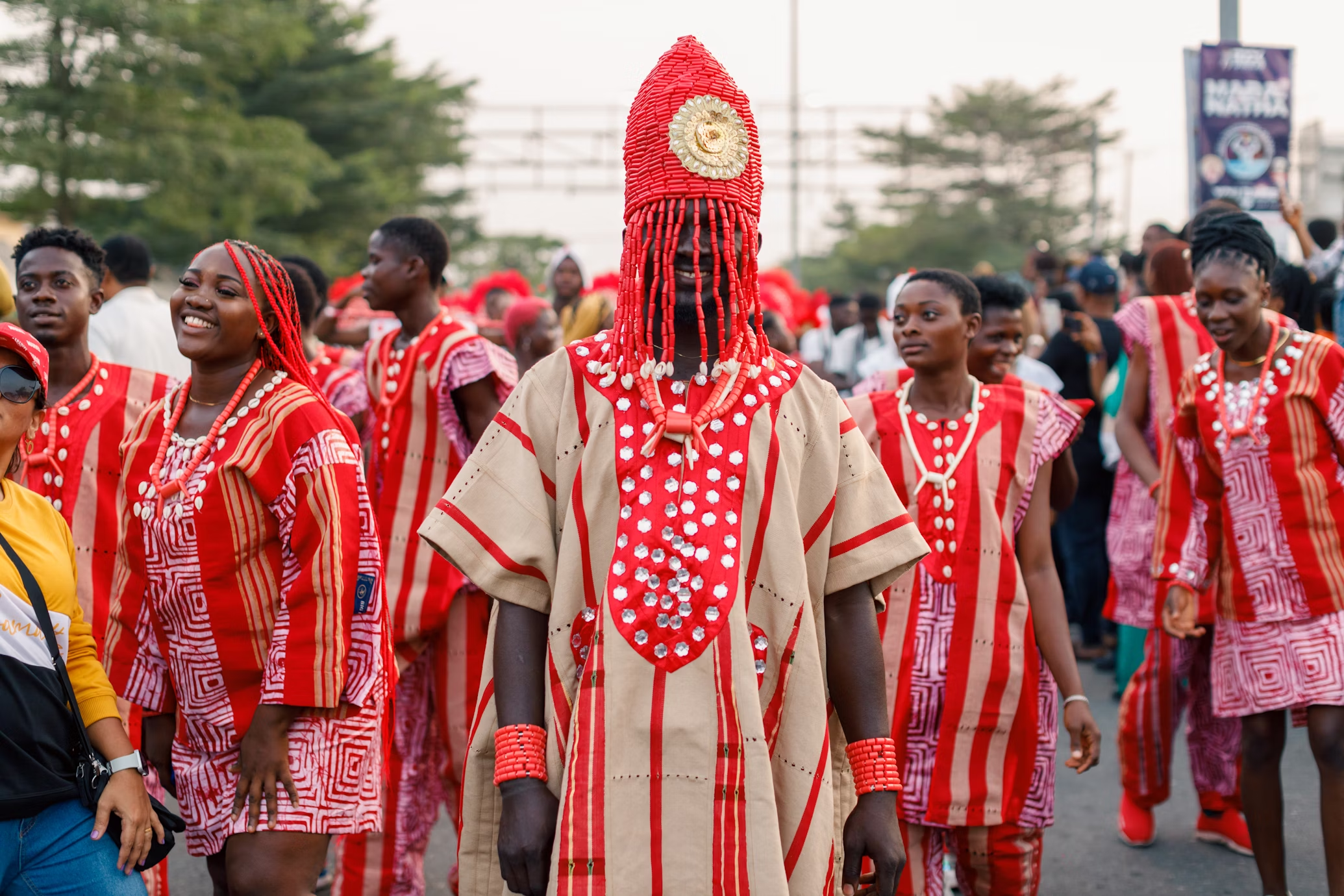
Image by Ben Iwara via Unsplash.