When global trade routes choke, Africa’s best option is to trade more with itself. A year after Liberation Day, with tariffs still in place and the Strait of Hormuz barely open, energy-driven inflation has drawn renewed attention to the African Continental Free Trade Area (AfCFTA). Analysts from the London School of Economics and Afreximbank agree that Africa must respond faster and more self-reliantly, but urgent action only helps if traders can act on it. Across Africa’s borders, most traders cannot. Not because they lack ambition, but because the systems built to serve them assume knowledge they do not yet have. To unlock the AfCFTA, Africa needs two things: learning systems that turn everyday border friction into practical knowledge, and decentralized ‘implementation hives’ that push information along real trade routes rather than through centralized, inaccessible bureaucracies.
The Architecture Is Working, But Only for the Informed
On paper, the AfCFTA’s progress is impressive. Intra-African trade hit $220.3 billion in 2024, raising its share of total trade from 13.6 percent to 14.9 percent. Thirty-seven nations now participate in the Guided Trade Initiative, and full implementation could raise trade by 24 percent in the short term and up to 45 percent by 2045. Behind these numbers are institutions that work — the Non-Tariff Barriers (NTB) Online Mechanism, the e-Tariff Book, Pan African Payment and Settlement System, and the Digital Trade Protocol.
Yet, every one of these tools operates on a ‘pull’ model: the user must already know what the tool is, believe they qualify for it, and translate their problem into its format. The Non-Tariff Barrier Online Mechanism, for example, had 1911 registered users across 54 nations by 2025. This is not proof of failure, but of reach limited to those already inside the system. It is capacity in action without widespread capability.
The Missing Asset: A Question That Can Be Asked
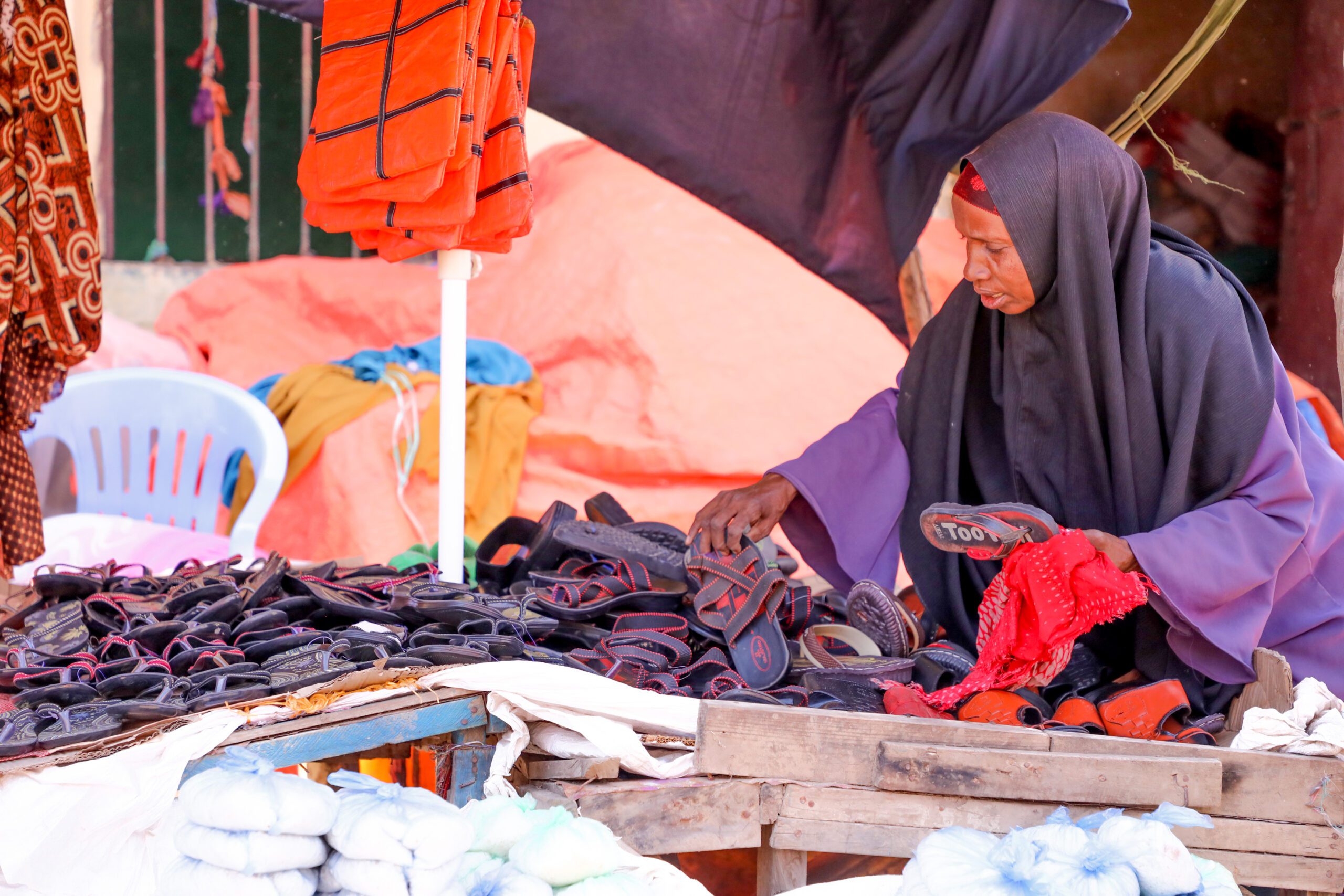
Fewer than 20 percent of African SMEs have tried exporting. Officials often treat this as an awareness problem and respond with brochures, outreach, and more workshops. But the trader waiting at Beitbridge is not pondering a “rule of origin.” She is facing a question of what is possible, a stalled consignment, and a customs agent asking for unfamiliar paperwork. Her problem exists before she has the language to explain it, and that gap is what kills trade capability. UNCTAD and the South African Institute of International Affairs have shown that in Africa, the cost of paperwork can exceed the tariff itself. The core divide is between capacity, the legal entitlement to trade within the continent with reduced friction, and capability, the operational ability to move goods through costly and complex border dynamics. The AfCFTA reforms address trading capacity, but the real test of capability lies in the paperwork, systems, and human interactions that shape how trade flows and who has the knowledge to participate.
Turning Friction into Function
To bridge this divide, Africa must design learning systems that turn the friction that current and prospective traders face into practical knowledge that builds trade capability. In learning design, this approach is called ‘latent-need surfacing’: it meets people where their problems actually arise, instead of waiting for them to ask the ‘right’ question. When a cross-border trader faces a delay or a rejected payment, that moment can trigger an automated response system that links her to the right AfCFTA instrument. The challenge is not to produce more policy documents, but to build smart, adaptive tools that respond to people’s lived experience in real time.
The Hive Model: Listening Downstream
Africa already has the geography for this distributed network. Africapolis identifies 635 urban border corridors where 42 million people live and where 30 percent to 40 percent of Africa’s trade is taking place, in communities whose livelihoods depend on cross-border and informal commerce. These towns are not abstractions on a map; they are living trade ecosystems. Through mobile money and Unstructured Supplementary Service Data (USSD) networks, Africa already connects these nodes: over one billion mobile subscriptions and feature phones handling 63.5 percent of transactions offer accessible entry points for policy-to-person communication.
Platforms like Sauti East Africa show what this can look like. Its SMS and USSD service for women traders in Kenya and Uganda answered 85,000 queries and boosted incomes by improving access to real-time information. The success lies in its logic: it listens first, then responds, in familiar languages and trusted channels.
This is Africa’s opportunity to build ‘implementation hives’, decentralized learning networks that follow real trade routes and identify zones of opportunity, rather than through bureaucratic, centralized pathways designed for those already in the know. A hive is not a portal but a pheromone trail: a network where traders, not ministries, determine how knowledge flows. The AfCFTA’s next frontier is not more capacity, but capability built in the places where trade already happens.
Sethu Nguna is Training & Instructional Design Manager at AidData Research Lab, William & Mary.
Photo by AMISOM via Iwaria.