
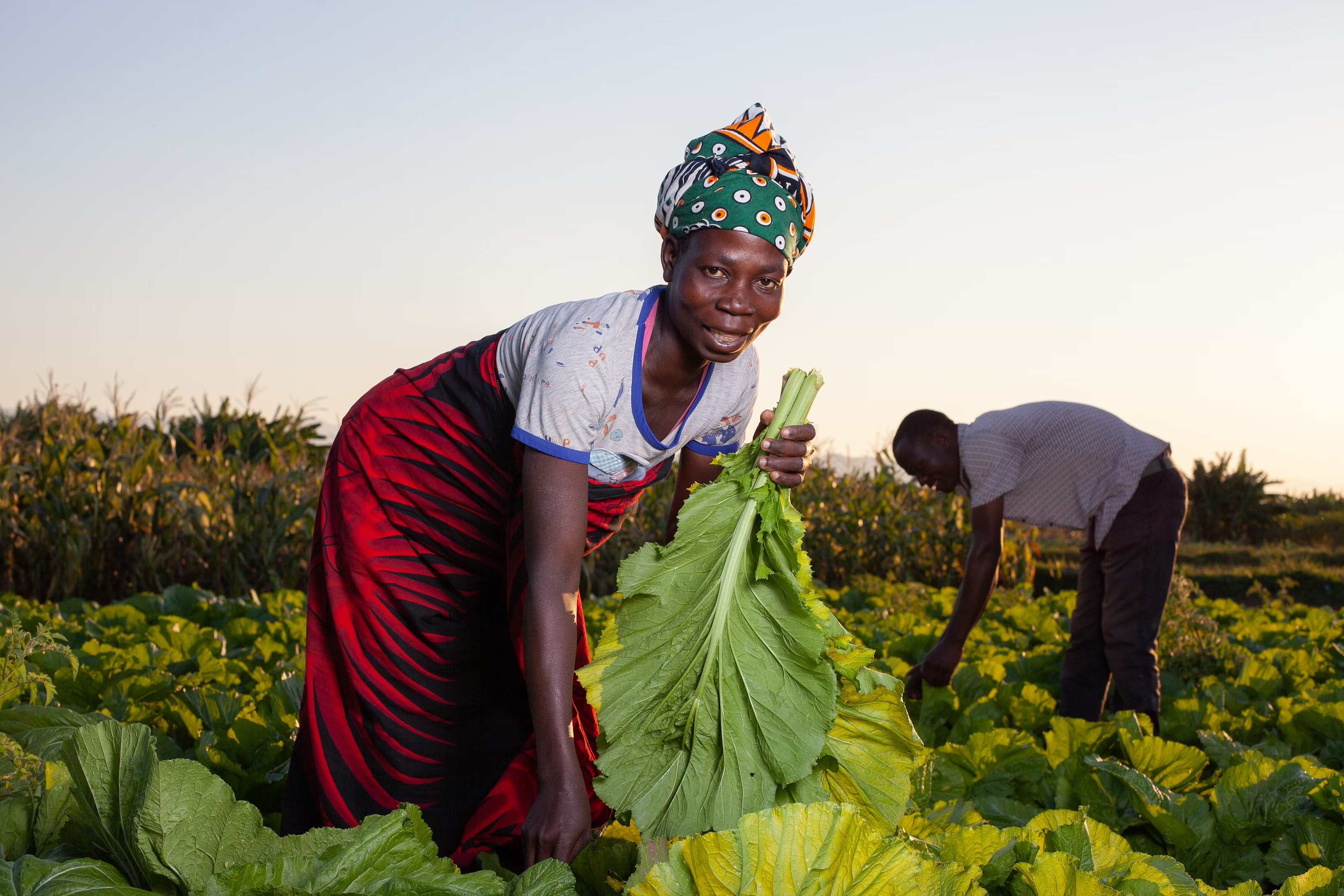
Nigeria, Africa’s most populous nation, is facing a severe hunger crisis. According to the World Food Programme, over 33 million Nigerians will experience acute food insecurity by mid-2025, a significant increase from 25 million in 2024. This alarming situation is not merely a humanitarian concern but a profound economic and human rights issue. The right to food is fundamental, and its denial undermines the dignity and well-being of millions of people. To address this challenge, the government must prioritize food security through investing in local security initiatives, rural infrastructure development, and targeted subsidies for farm inputs.
Food insecurity in Nigeria has far-reaching economic consequences. The Nutrition International estimates that undernutrition costs the country approximately USD $56 billion annually, accounting for 12.2 percent of Nigeria’s GDP. These costs stem from diminished productivity, increased healthcare expenses due to malnutrition-related illnesses, and the long-term impact on human capital development. The National Bureau of Statistics also noted that Nigeria’s food inflation rate has risen to 21.79 percent year-on-year as of March 2025. This surge in food prices erodes purchasing power, exacerbates poverty, and hampers productivity.
Insecurity continues to undermine food production in Nigeria, especially in the Northern part of the country, where violent conflicts have displaced over 3.5 million farmers as of early 2025. This mass displacement has led to abandoned farmlands, reduced food supply, and deepened the national hunger crisis. To address this, Nigeria must strengthen and expand local security models. An instance of an effective local security model is the Southwest’s Amotekun, which has shown great promise in protecting rural communities. The Southwest Security Network is distinct for its use of local intelligence, community-based personnel, and traditional security strategies tailored to the cultural and geographic context of the region. With proper funding, training, and coordination, similar initiatives can be scaled across vulnerable regions within Nigeria. Investing in surveillance technologies and community-based intelligence can also improve threat response and restore farming activities. A secure agricultural environment is critical not only for boosting food production but also for rebuilding trust, dignity, and livelihoods in conflict-affected areas.
Poor infrastructure contributes to food insecurity in Nigeria, causing an estimated ₦3.5 trillion in post-harvest losses annually, with nearly 50 percent farm produce never reaching consumers. Inadequate storage systems, dilapidated rural roads, and unstable electricity severely hinder food preservation and transportation. As a result, farmers suffer financial losses, while food prices soar, making basic staples increasingly unaffordable for millions, especially low-income households. These infrastructural gaps not only stall economic development but also violate the right to food, as tons of edible produce are wasted while large segments of the population remain malnourished.
To reverse this trend, Nigeria must prioritize rural infrastructure development, focusing on cold storage chains, feeder road construction, and stable electricity supply in key agricultural zones. Public-private partnerships can be pivotal in bridging these infrastructure deficits, attracting investment, and fostering innovation across the value chain. Brazil offers a powerful example, where strong logistics and agri-infrastructure reforms drastically cut food losses and improved market access for farmers. Nigeria can follow suit by replicating these models in its own agricultural heartlands.
The high cost of farming inputs — such as fertilizers, seeds, and agrochemicals — continues to hinder food production across Nigeria. With prices of key inputs soaring in early 2025, many smallholder farmers cannot afford the resources needed for planting and harvesting. The Nigerian Institute for Agricultural Research has warned that without immediate intervention to lower these costs, the nation could face a further collapse in agricultural output. This not only threatens food availability but also endangers millions of livelihoods tied to farming. To tackle this, the government must provide targeted subsidies for essential inputs and ensure smallholder farmers have access to low-interest credit through inclusive financial systems. Additionally, clear, consistent, and well-monitored agricultural policies are crucial to restore farmer confidence and promote long-term sustainability. A stable policy environment will help reduce uncertainty and attract private sector investment into the agricultural sector.
Nigeria stands at a crossroads. Addressing the hunger crisis requires immediate and coordinated action from the government, private sector, and civil society. Ensuring food security is not just about feeding the population; it’s about upholding human rights and fostering national stability. By implementing these recommendations, Nigeria can break the cycle of hunger and build a more prosperous future for all its citizens.
Sodiq Adeniji is a writing fellow at African Liberty.
Article first appeared in ModernGhana.
Photo by Richard Nyoni via Unsplash.