
Despite being one of Africa’s strongest economies, Kenya still struggles with food insecurity. According to the World Food Program (WFP), 13.6 million Kenyans had insufficient access to food as of August 2024.
The situation is especially severe in the arid and semi-arid regions (ASAL), which account for over 80 percent of Kenya, due to the relatively low amounts of annual rainfall received. Turkana, Marsabit, and Mandera counties are classified in Crisis Phase (IPC Phase 3) of the Integrated Food Security Phase Classification. The phase is characterized by acute malnutrition. Twenty other counties fall in phase 2, also known as the Stressed Phase, which means that while households have minimal food access, they are unable to afford some essential non-food expenditures.
In a recent report, the National Drought Management Authority noted that food security has remained relatively stable across most ASAL counties, thanks to the near-average rainfall during the long rain season. However, approximately 1.76 million people are still in urgent need of food assistance, a number expected to rise to 2.12 million by January 2026. This places the country in an endless cycle.
While food availability in the country is highly dependent on rainfall, other factors, including high inflation and women’s role in agriculture, contribute to the lack of progress.
Women at the Heart of Food Production
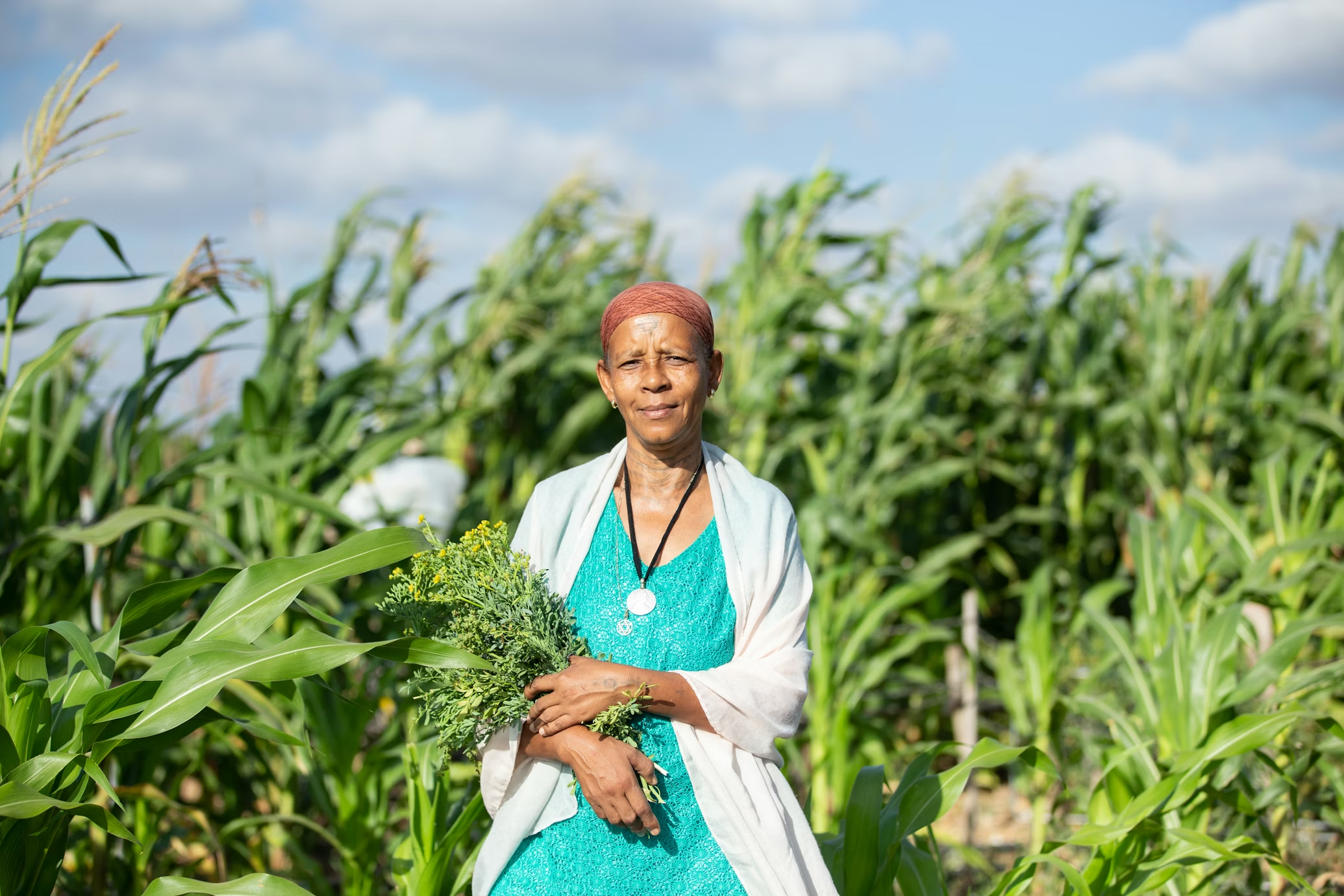
Women form the backbone of Kenya’s agriculture. They make up roughly 75 percent of its agricultural labor force and are responsible for up to 80 percent of food production. However, they are often marginalized in numerous other ways. Most women do not own land; they farm land owned by male relatives and depend on temporary user rights, which limit their participation in decisions concerning how it’s used. Moreover, they often hold vulnerable positions in agriculture, typically working in informal, part-time, low-skilled, and labour-intensive roles. This, coupled with inequalities in education, puts them at a double disadvantage, preventing them from fully contributing to the food supply.
Despite these barriers, women are leading agricultural initiatives, revolutionizing how food is grown in the country. For instance, Farm Africa, through its Regenerative Agriculture Project in Embu and Tharaka Nithi counties, is advancing agricultural practices that enhance soil health, build resilience to climate change, and boost farmers’ productivity and incomes. Using a Village-Based Advisor (VBA) extension model, the project has empowered several hundred local advisors who provide hands-on training and support to smallholder farmers. So far, over 340,000 farmers have been trained in sustainable and climate-smart farming methods. Women, in particular, have emerged as key leaders in this transformation, championing regenerative agriculture to improve livelihoods and safeguard the environment for future generations.
Breaking the Cycle from Above
The Kenyan government and development partners are also implementing policies to reduce vulnerability to drought. For instance, the government launched the National Agricultural Investment Plan and the Hunger Safety Net Programme, which provide cash transfers to food-insecure households in drought-prone areas.
Meanwhile, the Digital Land Governance Programme (DLGP), implemented in partnership with the European Union, FAO, and the Kenyan government, is helping to secure women’s land rights by digitalizing records and promoting gender-inclusive land management. The initiative has made significant progress by recognizing women’s central role in small-scale agriculture and ensuring their inclusion in land governance.
Kenya’s Constitution supports gender representation in community land management committees. It allows women to be registered as independent landowners, enabling them to vote, hold leadership roles, and participate in land transactions that require both spouses to appear before county land boards.
The DLGP has helped register community lands and continues to support the development of a gender policy for the land sector, promote gender-inclusive planning, and enhance women’s digital literacy to improve access to digitalized land records through the Ardhi Sasa system—all aimed at strengthening women’s participation in land governance and decision-making at every level.
What More Needs to Be Done
To achieve stable food access, Kenya needs to address both structural and social inequalities. More investment in irrigation infrastructure can reduce the reliance on erratic rain, and investment in agricultural research can lead to more climate-resistant crops. We should also advocate for equitable access to land, credit, markets, and technology.
Public awareness campaigns can ensure that women and men alike are aware of the social and economic benefits of gender-inclusive agriculture. At the same time, empowering women farmers to participate in leadership and land governance decisions can accelerate progress toward sustainable food systems.
Citizens can do their part by buying local, reducing food waste, and supporting initiatives that promote equitable farming. Realizing this reality will require everybody’s effort.
Sameer Somal and Marion Nekesa are founder and director respectively at Girl Power USA.
Image by Gidon Agaza via Unsplash.