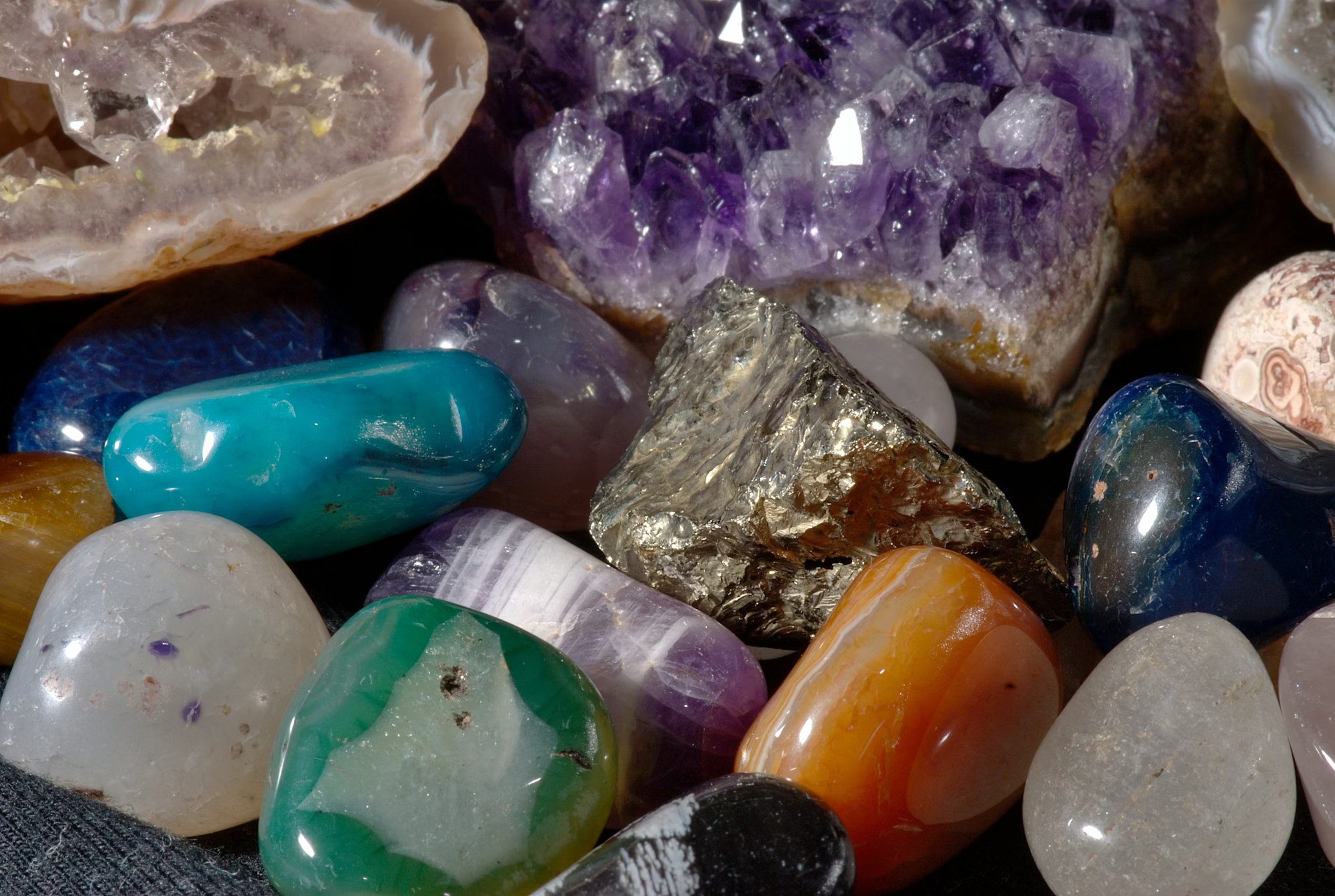
Critical minerals, such as lithium, cobalt, and rare earth elements, have become central to global mining policies due to their crucial role in the clean energy transition. The World Bank projects that demand for these minerals could grow by up to 500 percent by 2050. Angola, with its rich geological endowment, is well-positioned to benefit from this surge in demand. Yet, the country often defines critical minerals based on international demand rather than national strategic priorities, and has continued to export unprocessed raw minerals without integrating them into local value chains. Such an approach undermines structural transformation, leaving the economy vulnerable to external shocks.
Angola’s National Development Plan (NDP) 2023–2027 and Vision 2050 emphasize industrialization, energy transition, and economic diversification. Failing to align mineral policy with these goals risks perpetuating the historical pattern of extraction without transformation. Without a clear national strategy, Angola may continue to miss out on industrial upgrading, job creation, and regional economic influence. To address this, Angola should establish a legally binding list of critical minerals that prioritizes those essential for industrialization, energy transition, and digital infrastructure, including lithium, cobalt, copper, and rare earth elements. This list should be reviewed every three years to ensure it remains current with market shifts and emerging technologies. Prioritizing minerals in this way ensures that policy supports national development goals rather than simply responding to global demand.
Alongside this, Angola should introduce a standard for the sustainability of critical minerals. This standard must include a requirement for environmental and social assessments, biodiversity conservation measures, and water usage audits. To implement this vision, Angola’s Ministry of Mineral Resources, Petroleum, and Gas should lead the creation of a standard, anchored in the National Development Plan and Angola Vision 2050, guided by a multi-stakeholder task force with clearly defined roles.
Mining companies, both local and international, should provide operational expertise to ensure the list reflects industrial feasibility and investment potential, while local manufacturers, including metal processors, battery assemblers, and renewable energy equipment producers, should ensure the standard promotes value within Angola rather than raw mineral exports. The task force would draft the standard, assess mineral deposits, domestic processing capacity, and industrial demand.
Concurrently, compliance for this vision can be monitored by an independent monitoring body, ideally housed within the National Agency for Mineral Resources but operationally separate, with authority to conduct environmental and social audits, review company practices, and publish annual reports. Projects failing to meet these standards would lose their “critical” classification and any related incentives. Implementing these measures would align Angola’s mining practices with international sustainability commitments, preventing environmental degradation, social displacement, and reputational risks that could undermine investor confidence.
Ultimately, Angola can capitalize on its critical minerals for strategic trade. The government should negotiate agreements that require foreign companies to invest in local processing, technology transfer, and regional manufacturing partnerships, such as those involved in battery assembly or wind turbine production. Trade frameworks under the African Continental Free Trade Area and Southern African Development Community can attract strategic industries and infrastructure investments, turning Angola’s mineral wealth into engines of industrial growth.
Angola has the minerals the world needs, but its real opportunity lies in transforming them into drivers of national development. By setting clear priorities, enforcing sustainability, and strategically leveraging trade, Angola can shift from being a supplier of raw resources to a builder of industries, powering not only the global clean energy transition but also its own long-term economic transformation.
Elizabeth Moises is a writing fellow at African Liberty.
Article first appeared in Modern Ghana.
Image by Jet Stouten via Unsplash.